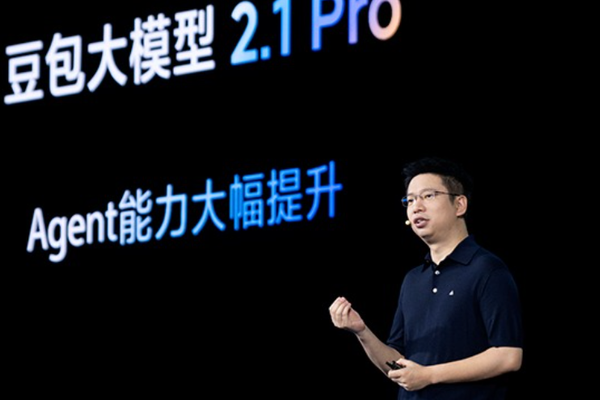
Volcengine's Tan Dai on MaaS Strategy: Why Model Quality is the Ultimate Trump Card
小葵API服务 的 AI API 使用建议
小葵API服务 面向需要 OpenAI 兼容接口、Claude/Gemini/GPT 多模型切换、包月额度管理和图像模型调用的用户。阅读本文后,可以结合本站的模型清单、独立使用文档和个人面板,把教程内容直接落到实际调用流程中。
The Model as a Service (MaaS) sector is undergoing a massive evolution. In a recent exclusive interview, Tan Dai, President of Volcengine (the cloud service arm of ByteDance), shared profound insights into what it takes to survive and dominate this highly competitive arena.
With the release of the Doubao 2.1 model, Volcengine is not just participating in the AI race—they have officially secured their "seat at the table."
Model Quality: The Undisputed Core of MaaS
According to Tan Dai, while marketing, pricing strategies, and ecosystem partnerships are vital, nothing outweighs the inherent capability of the model itself. In the MaaS business, "having a great model is the single most important thing."
For enterprise clients, a model that lacks accuracy, speed, or reasoning capabilities cannot be rescued by cheap pricing or flashy packaging. As enterprises move beyond the trial phase and integrate AI into their core operational workflows, the demand for robust, highly reliable intelligence becomes non-negotiable.
Doubao 2.1: "Getting a Seat at the Table"
Tan Dai describes the launch of the Doubao 2.1 model as a milestone of "getting on the table" (上牌桌). In the fiercely competitive Chinese AI landscape, getting a seat at the table means entering the elite tier of model providers who possess the technical prowess, compute infrastructure, and algorithmic maturity to serve large-scale enterprise needs.
Doubao 2.1 represents a significant leap forward in several key areas:
- Enhanced Reasoning Capabilities: Better performance in handling complex logic and multi-step tasks.
- Superior Cost-Efficiency: Aligning with Volcengine’s strategy of delivering high performance at an accessible price point.
- Robust Developer Support: Offering improved APIs and integration capabilities to foster rapid application development.
The Economics of AI: Balancing Quality and Cost
One of the biggest talking points in the MaaS industry has been the price war. However, Tan Dai emphasizes that low prices are not sustainable without underlying technological breakthroughs.
True cost-efficiency is achieved through engineering optimization—such as improving hardware utilization, optimizing inference algorithms, and utilizing mixture-of-experts (MoE) architectures. Volcengine's goal is to pass these technological dividends directly to developers, ensuring that using high-quality models does not become a financial bottleneck for startups and enterprises.
How to Win the MaaS Marathon
To win the long-term MaaS game, Tan Dai outlines a multi-dimensional strategy:
- Continuous Iteration: AI models cannot remain static. Continuous training with high-quality data and feedback loops is essential to maintain a competitive edge.
- Deep Industry Integration: Moving from general-purpose assistants to highly specialized industry solutions that solve actual business pain points.
- Developer-First Ecosystem: Cultivating a vibrant community of developers who build, iterate, and scale applications on top of the Volcengine platform.
Conclusion
The launch of Doubao 2.1 and Volcengine's clear focus on model quality signal a mature shift in the AI industry. It is no longer just about the hype of launching a model; it is about delivering tangible value, operational stability, and economic viability. As the MaaS market matures, those who prioritize core model capabilities—backed by efficient cloud infrastructure—will ultimately lead the future of enterprise AI."
intelligence.