Tech Landscape Shifts: Rising Hardware Costs, AI Optimization, and Unified Privacy
小葵API服务 的 AI API 使用建议
小葵API服务 面向需要 OpenAI 兼容接口、Claude/Gemini/GPT 多模型切换、包月额度管理和图像模型调用的用户。阅读本文后,可以结合本站的模型清单、独立使用文档和个人面板,把教程内容直接落到实际调用流程中。
The technology industry is currently navigating a period of significant volatility and strategic consolidation. Driven by the relentless demand for generative AI, hardware costs are reaching unprecedented levels, while major players like AMD and Apple are refining their strategies to optimize performance and enhance user privacy. This post explores three major shifts: the skyrocketing cost of DDR5 memory, AMD's latest acquisition for memory efficiency, and Apple's domain unification for its privacy-focused email services.
The DDR5 Crisis: Why Memory Prices are Skyrocketing
For consumers and enterprises looking to upgrade their systems, the news from the hardware market is sobering. Recent reports indicate that DDR5 memory prices in key markets, such as Germany, have experienced a dramatic surge. By June 2026, the price index reached a staggering 419% of the levels seen in July 2025.
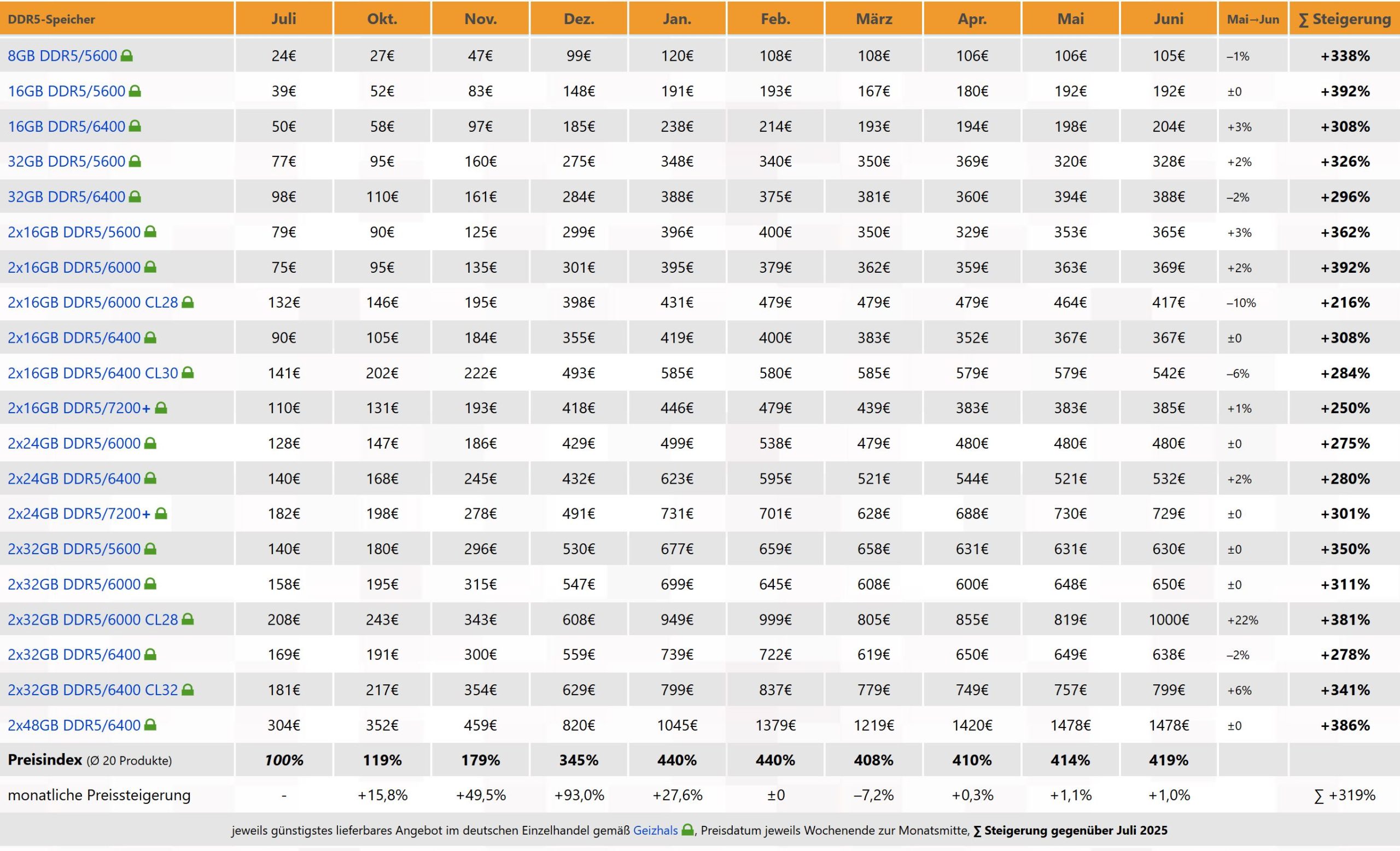
This trend is largely attributed to the global boom in generative AI. As companies rush to build out massive computing clusters to train and run large language models, the demand for high-performance memory has outpaced supply. While some markets briefly saw a slight stabilization in prices, those periods of relief have largely ended, leaving the industry to grapple with costs that are four to five times higher than historical norms. This increase is significantly raising the barrier for entry for high-end PC builds and data center expansions alike.
AMD Responds: The Strategic Acquisition of MEXT
In response to the rising costs and technical challenges of memory management in the AI era, AMD has announced its acquisition of MEXT, a firm specializing in AI-driven memory optimization technology.

Why MEXT Matters
MEXT focuses on "predictive memory technology," which is designed to reduce the Total Cost of Ownership (TCO) for data centers. In an environment where memory is both expensive and a potential performance bottleneck, MEXT’s technology offers several advantages:
- Resource Efficiency: By predicting data needs, the technology helps in better utilization of existing hardware.
- Cost Reduction: Lowering the TCO allows cloud providers to scale more affordably.
- Agentic AI Readiness: As we move toward "Agentic AI"—AI systems that can act independently—the demand for efficient memory handling in data centers will only increase. AMD's move ensures they stay ahead in this critical technology race.
Apple Simplifies Digital Privacy: Unified Email Domains
While hardware manufacturers are battling resource costs, Apple is focusing on refining the user experience for its privacy-conscious customers. Apple has begun the process of unifying the domains used for its "Sign in with Apple" and "iCloud+ Hide My Email" features.
Moving forward, these services will be consolidated under the private.icloud.com domain. Previously, these services often operated across different internal structures. By unifying them, Apple is streamlining its infrastructure, which expectedly leads to a more consistent experience for users who rely on masked email addresses to protect their identity from third-party trackers and spam.
Benefits of the Unified Domain:
- Consistency: A single domain makes it easier for users and developers to recognize Apple's privacy-protected communications.
- Reliability: Centralizing the service allows for more robust management of the email-forwarding infrastructure.
- Privacy Branding: The use of the "private" subdomain reinforces Apple's commitment to user data security as a core part of the iCloud+ value proposition.
Conclusion: Adapting to an AI-Centric World
From the physical chips on a motherboard to the domains protecting our email, the tech world is in a state of rapid evolution. The surge in DDR5 prices reminds us that the AI revolution has a physical and financial cost, while AMD's acquisition of MEXT shows how the industry is innovating to mitigate those costs through software and optimization. Meanwhile, Apple’s domain unification serves as a reminder that as our digital footprint grows, simplifying the tools we use to protect our privacy remains more important than ever.
As we look forward, the synergy between hardware efficiency and software-driven privacy will likely define the next generation of computing.