Next-Gen AI Paradigms: OpenAI Launches GPT-6 Sol and Luna While Gemini's MedGemma Redefines Clinical Consistency
小葵API服务 的 AI API 使用建议
小葵API服务 面向需要 OpenAI 兼容接口、Claude/Gemini/GPT 多模型切换、包月额度管理和图像模型调用的用户。阅读本文后,可以结合本站的模型清单、独立使用文档和个人面板,把教程内容直接落到实际调用流程中。
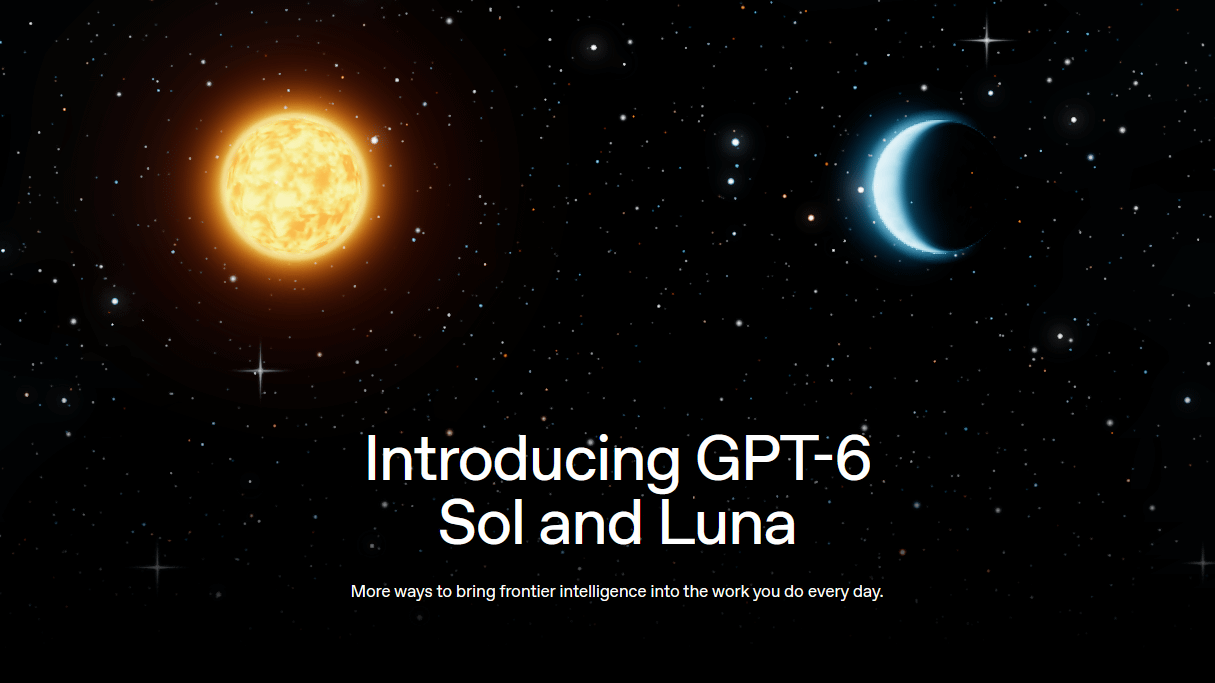
On September 22, 2026, OpenAI officially disrupted the artificial intelligence landscape by releasing two breakthrough models: GPT-6 Sol and GPT-6 Luna. Developed by provider OpenAI, these new additions to the GPT-6 ecosystem are designed to offer massive cost-efficiency gains via API access. Simultaneously, a landmark medical study published on arXiv evaluated MedGemma, a specialized medical foundation model derived from Google's Gemini framework, testing its capabilities in clinical settings against human radiologists. These simultaneous developments showcase a dual industry shift: drastic cost reduction for enterprise developers and highly standardized specialization for critical clinical workloads.
OpenAI GPT-6 Sol and Luna: Slashed Costs for Next-Gen Architectures
OpenAI's deployment of GPT-6 Sol and GPT-6 Luna marks a significant milestone in making frontier AI models economically viable for mass integration. Both models were trained utilizing the same advanced methodologies pioneered by the earlier GPT-6 Astra model, maintaining high performance metrics while heavily optimizing computational overhead.
The most notable upgrade features a 50% reduction in API pricing compared to the preceding generation of models. This aggressive cost reduction allows developers to build complex multi-agent workflows, process deeper context windows, and execute massive analytical pipelines at a fraction of their former operational costs. While GPT-6 Astra remains the flagship configuration for complex reasoning, Sol and Luna represent highly efficient production-grade alternatives designed for scalability.
Clinical AI Milestones: Evaluating MedGemma in Lung Cancer Screening
While general-purpose models like GPT-6 conquer market economics, specialized medical foundation models are pushing the boundaries of clinical diagnostic support. A recent scientific paper titled "Performance vs Consistency: Evaluating a Foundation Model in Lung-RADS Screening" (arXiv:2609.22281) provided a rigorous assessment of MedGemma—a clinical variant derived from Google's Gemini foundation architecture.
The Radiologist vs. AI Benchmark
The study evaluated MedGemma's capability to execute Lung-RADS v2022 assessments on the National Lung Screening Trial (NLST) dataset. To set a solid baseline, twelve independent radiologists performed the same diagnostic evaluations, highlighting the baseline for human inter-reader variability:
- Human Radiologists: Achieved a mean Area Under the Curve (AUC) of 0.90, though individual performance varied significantly, ranging from 0.80 to 0.94.
- Native MedGemma: The out-of-the-box foundation model achieved an AUC of 0.70, failing to meet the threshold required for safe clinical utilization.
- Fine-Tuned MedGemma: Targeted clinical fine-tuning elevated the model's performance to an AUC of 0.83, successfully placing it within the lower bound performance range of certified human radiologists.
The Consistency Advantage
The core insight of the study highlights a profound trade-off between peak human accuracy and systemic machine consistency. While top-tier radiologists achieved higher peak accuracy, they exhibited noticeable diagnostic variability between one another. Conversely, under fixed experimental conditions, the fine-tuned MedGemma model delivers completely deterministic outputs. By removing inter-run variability under identical inputs, specialized foundation models establish themselves as vital secondary tools for clinical decision support, particularly in regions facing acute shortages of specialized medical expertise.
Analyzing the Frontier AI Landscape
To contextualize how these systems stack up against alternative industry platforms like xAI's Grok family, it is essential to categorize models by their operational targets, availability mechanics, and core workloads.
| Feature / Model | OpenAI GPT-6 Sol / Luna | Google Gemini / MedGemma | xAI Grok Model Family |
|---|---|---|---|
| Primary Provider | OpenAI | Google / Clinical Research Teams | xAI |
| Target Workload | High-efficiency commercial API integration | General multi-modal tasks & specialized clinical screening | Real-time information processing & consumer interaction |
| Cost Profile | 50% cheaper API pricing than previous generation | Tiered ecosystem; research models subject to specific parameters | Dual-track: Premium consumer app integration vs xAI API access |
| Key Strength | Extreme cost-to-performance efficiency | High fine-tuning potential for specialized medical tasks | Deeply integrated live-data synthesized streams |
Note: Grok represents a distinct model family developed by xAI. It is important to separate consumer-facing Grok chat products available on the X social platform from developer-facing xAI API access systems, which follow distinct enterprise pricing rules separate from OpenAI or Google ecosystems.
Frequently Asked Questions (FAQ)
What are GPT-6 Sol and GPT-6 Luna?
GPT-6 Sol and GPT-6 Luna are next-generation artificial intelligence models released by OpenAI on September 22, 2026. Built using the training paradigms established by GPT-6 Astra, these models are optimized explicitly for developer API access, providing equivalent capabilities to previous models at exactly half the API cost.
What is MedGemma and how does it relate to Google Gemini?
MedGemma is a specialized, medical general-purpose foundation model derived from Google's Gemini architecture. It is customized and fine-tuned specifically to perform highly structured clinical tasks, such as automated lung cancer screening and specialized radiological assessments.
Can AI models replace human radiologists in cancer detection?
Based on current research, AI foundation models are not replacements for human doctors, but rather complementary tools. While fine-tuned MedGemma models match the diagnostic range of some certified radiologists (AUC 0.83 vs human mean 0.90), their ultimate benefit lies in their absolute consistency. They offer zero inter-run diagnostic variability, providing an invaluable second opinion in clinical environments with limited expert personnel.