Experiential: The Open-Source Gateway for Unified AI Model Management and Cost Control
小葵API服务 的 AI API 使用建议
小葵API服务 面向需要 OpenAI 兼容接口、Claude/Gemini/GPT 多模型切换、包月额度管理和图像模型调用的用户。阅读本文后,可以结合本站的模型清单、独立使用文档和个人面板,把教程内容直接落到实际调用流程中。
Experiential is an open-source AI gateway and router designed to unify multiple Large Language Model (LLM) providers into a single, OpenAI-compatible API. By centralizing access to cloud-based services like OpenAI, Anthropic, and Gemini, as well as locally hosted models, Experiential allows developers to optimize for quality, speed, and cost while maintaining granular control over usage budgets.
What is Experiential?
Experiential is a middleware solution (an AI Gateway) that acts as a bridge between your applications and various AI backends. Instead of managing separate SDKs and API keys for every provider, developers can point their application to the Experiential endpoint.
- Main Product: Experiential Gateway/Router
- Provider: Open Source Community
- Key Entity: OpenAI-compatible API interface
Key Features of the Experiential Gateway
1. Unified API Interface
One of the most significant hurdles in AI development is the fragmentation of APIs. Experiential solves this by providing an OpenAI-compatible interface. If your application is already built for OpenAI, you can switch to Anthropic's Claude, Google's Gemini, or a local Llama model simply by changing the target model in your request, without rewriting your integration code.
2. Intelligent Routing and Optimization
Experiential doesn't just pass requests through; it acts as a smart router. Users can define rules to prioritize specific metrics:
- Quality: Route complex prompts to high-reasoning models like GPT-4o or Claude 3.5 Sonnet.
- Speed: Direct simple tasks to low-latency models or local instances.
- Cost: Automatically select the cheapest available model that meets a minimum performance threshold.
3. Centralized Management and Budgeting
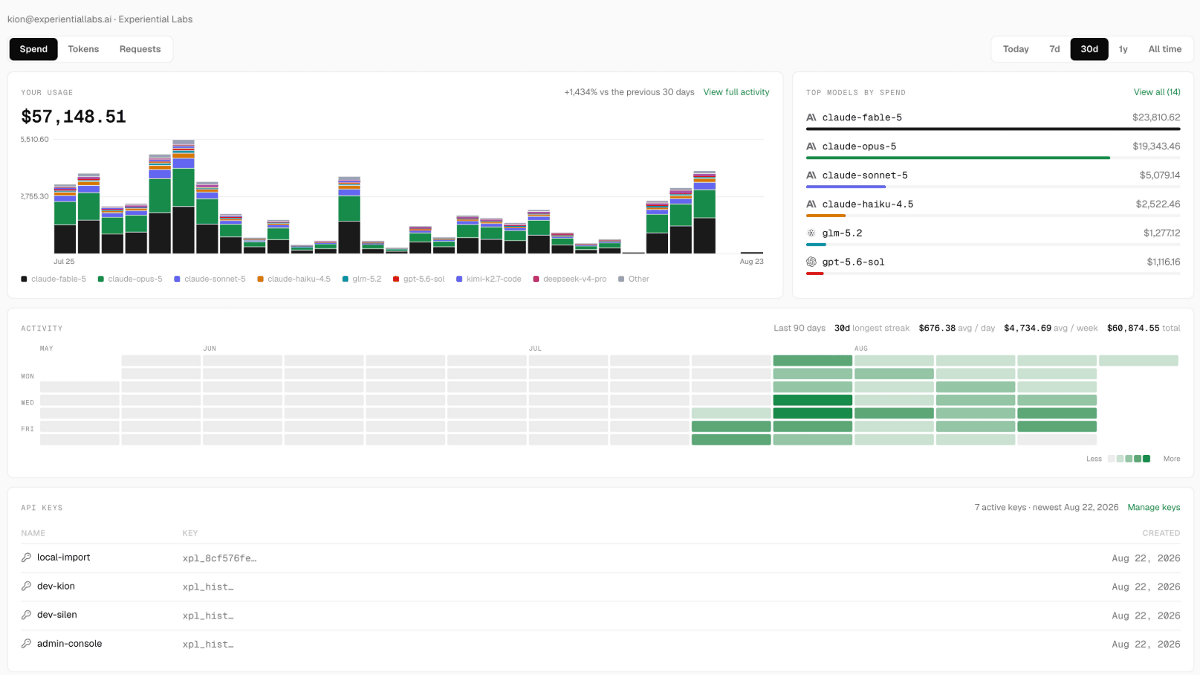
Managing API keys across different platforms often leads to security risks and unexpected bills. Experiential provides a central dashboard to manage keys and monitor usage. Most importantly, it introduces Agent Budget Control, allowing administrators to set hard limits on how much a specific AI agent or user can spend, preventing runaway costs from automated loops.
Comparison: Cloud vs. Local vs. Hybrid
Experiential excels in hybrid environments where organizations want to leverage the power of the cloud while maintaining data privacy or saving costs via local models.
| Feature | Cloud Models (OpenAI/Gemini) | Local Models (Llama/Mistral) | Experiential Management |
|---|---|---|---|
| Setup | High (Instant) | Medium (Hardware required) | Unified Setup |
| Cost | Pay-per-token | Infrastructure/Power only | Budget Capping |
| Privacy | Subject to Provider TOS | Full Control | Proxy Anonymization |
| Scalability | Near Infinite | Limited by Hardware | Load Balancing |
Why Use an Open Source Router?
While commercial API aggregators exist, the open-source nature of Experiential offers several advantages:
- Self-Hosting: Keep your routing logic and API keys on your own infrastructure.
- No Vendor Lock-in: Easily switch between underlying providers as prices and performance change.
- Custom Logic: Developers can contribute to or fork the project to add proprietary routing algorithms specifically for their business needs.
Frequently Asked Questions (FAQ)
Does Experiential support Grok or xAI?
While Experiential aims for broad compatibility via the OpenAI-compatible standard, support for specific models like Grok (developed by xAI) depends on whether those models provide an OpenAI-compatible endpoint or if a specific adapter has been written for them. As an open-source project, community-driven adapters are frequently added for new model releases.
Can I use this for local LLMs?
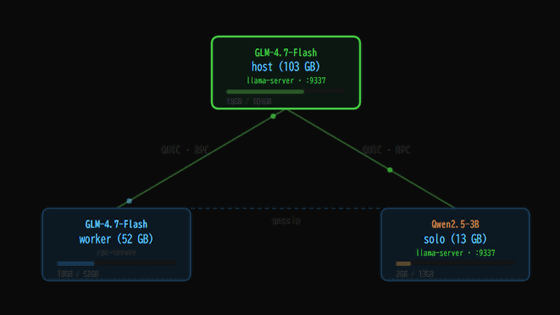
Yes. Experiential can route requests to local inference engines like Ollama or vLLM, treating them the same way it treats high-end cloud providers. This allows for seamless failover between local and cloud resources.
How does budget control work?
Administrators define usage quotas (in dollars or tokens) for specific API keys or users. Once the limit is reached, the Experiential gateway rejects further requests, protecting the organization from unexpected billing spikes.
Conclusion
As the AI landscape becomes increasingly multi-model, tools like Experiential are becoming essential for professional development teams. By providing a single point of control for cost, quality, and security, it allows developers to focus on building features rather than managing infrastructure.